
Reflection: Framing and Reframing Learning
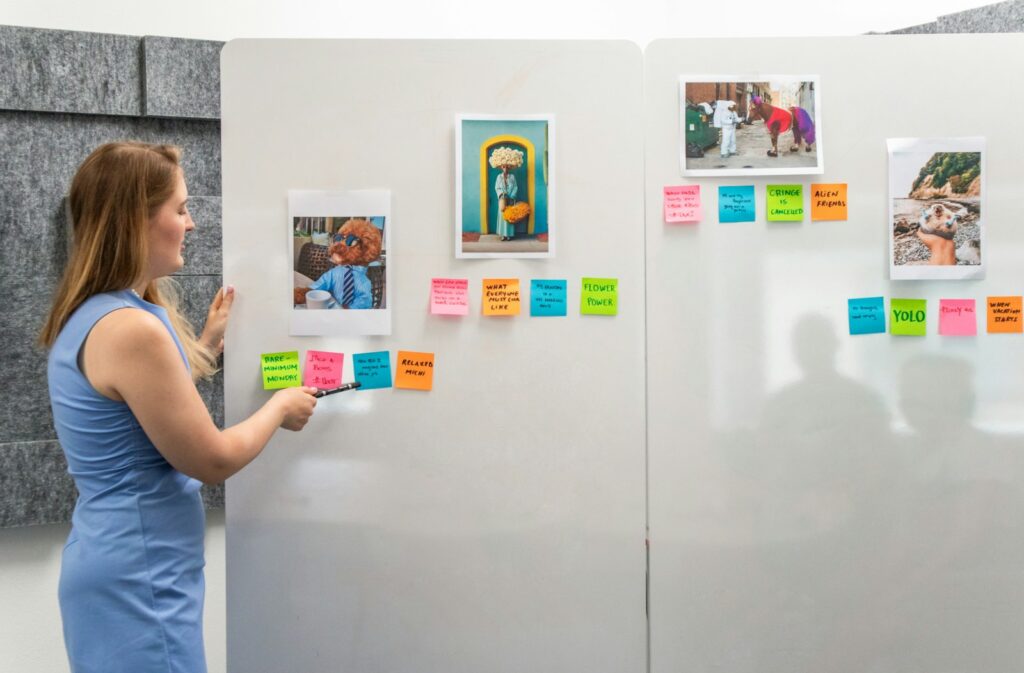
Framing learning in my practice initially revealed assumptions about how knowledge should be structured and transmitted. Bernstein (1971, 2000) explains that classification and framing of knowledge define what counts as legitimate learning, often privileging dominant discourses. My own design choices sometimes reflected an unspoken assumption that academic English and Western frameworks were the primary pathways to knowledge. This narrow framing risked marginalising students whose cultural and linguistic resources did not align with these norms. Recognising this assumption is essential because unchallenged frames can reproduce inequities in learning opportunities.
One assumption I will discard is the belief that all students learn best when conforming to dominant cultural norms. Research demonstrates that learning is not universal but socially and culturally mediated. For instance, Lave and Wenger (1991) emphasise that knowledge develops through participation in communities of practice, while Immordino-Yang and Damasio (2007) highlight the embodied and affective nature of learning. Similarly, Moll et al. (1992) argue that students’ “funds of knowledge” from home and community should be recognised as valuable. Discarding my earlier assumption allows me to design more inclusive practices that recognise diverse cultural ways of knowing as legitimate (Nolen, 2020).
One philosophy I will commit to is culturally relevant pedagogy. Ladson-Billings (1995) proposed that effective pedagogy both affirms students’ identities and promotes academic success, while Rigney (2023) expands this commitment to address global diversity and super-diverse classrooms. By adopting this philosophy, I align with educators who view equity as central to teaching rather than optional. Paris and Alim (2017) extend this thinking into culturally sustaining pedagogy, which seeks not only to affirm but to sustain cultural and linguistic pluralism. Committing to this philosophy means that I will continue to see cultural identity as an asset to learning rather than a challenge to overcome. For instance, in a digital learning environment, I might allow students to include examples from their home communities when completing assignments, so their cultural knowledge becomes part of the learning process.
One reframe I will integrate is the concept of third space learning (Gutiérrez, 2008; as cited in Hand, Penuel, & Gutiérrez, 2013). Third space learning creates hybrid contexts where academic and community knowledge intersect, producing new possibilities for participation and identity. This resonates with my own observations that students learn most powerfully when their lived experiences are positioned as resources in digital learning environments. For example, when I invited students to integrate community stories into reflective tasks, they not only engaged more deeply but also positioned themselves as knowledge producers. Reframing through third space allows me to view learning design as relational and generative, rather than bounded by school norms (Immordino-Yang & Gotlieb, 2017).
Ultimately, reframing my approach highlights that learning is not simply about knowledge transfer but about equity, identity, and participation in diverse communities. By discarding assumptions of homogeneity, committing to culturally relevant pedagogy, and reframing through third space learning, I can design digital environments that honour multiple ways of knowing. This reflection reminds me that reframing is not a one-time shift but an ongoing responsibility to critically examine how my designs expand or constrain what becomes possible for learners.
References
Bernstein, B. (1971). On the classification and framing of educational knowledge. In M. F. D. Young (Ed.), Knowledge and control: New directions for the sociology of education (pp. 47–69). London: Collier-Macmillan.
Bernstein, B. (2000). Pedagogy, symbolic control and identity: Theory, research, critique (Rev. ed.). Lanham, MD: Rowman & Littlefield. https://archive.org/details/pedagogysymbolic0000bern
Hand, V., Penuel, W. R., & Gutiérrez, K. D. (2013). (Re)framing educational possibility: Attending to power and equity in shaping access to and within learning opportunities. Human Development, 55(5–6), 250–268. https://doi.org/10.1159/000345313
Immordino-Yang, M. H., & Damasio, A. (2007). We feel, therefore we learn. Mind, Brain, and Education, 1(1), 3–10. https://doi.org/10.1111/j.1751-228X.2007.00004.x
Immordino-Yang, M. H., & Gotlieb, R. (2017). Embodied Brains, Social Minds, Cultural Meaning: Integrating Neuroscientific and Educational Research on Social-Affective Development. American Educational Research Journal, 54(1_suppl), 344S-367S. https://doi.org/10.3102/0002831216669780
Ladson-Billings, G. (1995). Toward a theory of culturally relevant pedagogy. American Educational Research Journal, 32(3), 465–491. https://doi.org/10.3102/000283120320034
Lave, J., & Wenger, E. (1991). Situated learning: Legitimate peripheral participation. Cambridge University Press. https://doi.org/10.1017/CBO9780511815355
Moll, L. C., Amanti, C., Neff, D., & Gonzalez, N. (1992). Funds of knowledge for teaching: Using a qualitative approach to connect homes and classrooms. Theory Into Practice, 31(2), 132–141. https://doi.org/10.1080/00405849209543534
Nolen, S. B. (2020). A situative turn in the conversation on motivation theories. Contemporary Educational Psychology, 61. https://doi.org/10.1016/j.cedpsych.2020.101866
Paris, D., & Alim, H. S. (2017). Culturally sustaining pedagogies: Teaching and learning for justice in a changing world. Teachers College Press. https://eric.ed.gov/?id=ED580787
Rigney, L. I. (2023). Global perspectives and new challenges in culturally responsive pedagogies: Super-diversity and teaching practice. Routledge. https://doi.org/10.4324/9781003335719